Are you ready for what's next?
The term 'orchestration' has gained momentum as logistics moves towards the next phase of digital transformation. In last-mile parcel delivery, this evolution is steering us towards a future where operations are not just automated, but seamlessly integrated, intelligent, and potentially autonomous. But how close are we to this vision of a fully orchestrated future? And what are the measurable effects of levelling up?
Delivery orchestration goes beyond automating tasks. It syncs up every part of your delivery process in real-time to ensure flexibility and seamless operation. Workflows are coordinated harmoniously like a well-choreographed dance or a symphony. The goal? To cut inefficiencies, boost productivity, slash costs, and make package delivery a fantastic experience for everyone.
Discover the five critical stages of a parcel service provider's transformation journey. Watch our video to anticipate the market’s future and benchmark your company's progress.
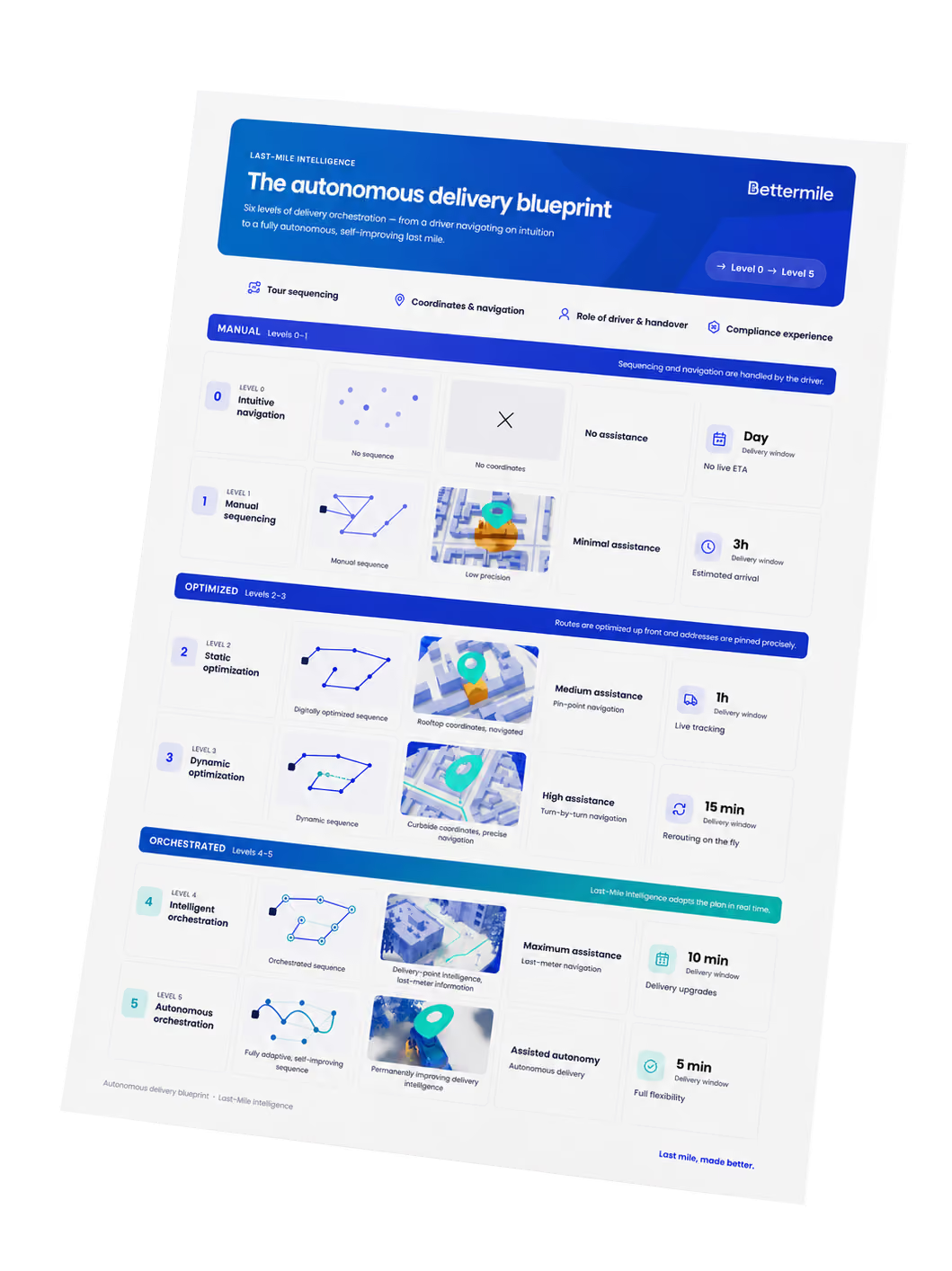
There are five delivery orchestration levels, classified based on their degree of automation and workflow synchronization. The spectrum ranges from level 0 to level 5 – from no automation to fully orchestrated automation.

The driver uses tools without the support of automated processes, controlling the full last-mile delivery process.

The journey towards transformation begins with the introduction of basic automations, though the driver remains primarily in control.
The driver is now supported by continuous, dynamic assistance as sophisticated last mile optimization initiatives enhance operational efficiency at every step.
Transition to a system where automated and synchronized processes dominate, significantly reducing the need for driver involvement in decision-making.

Seamlessly orchestrated and fully adaptive last mile operations. AI and autonomous delivery systems are able to learn, adapt, and make smart decisions in real time.
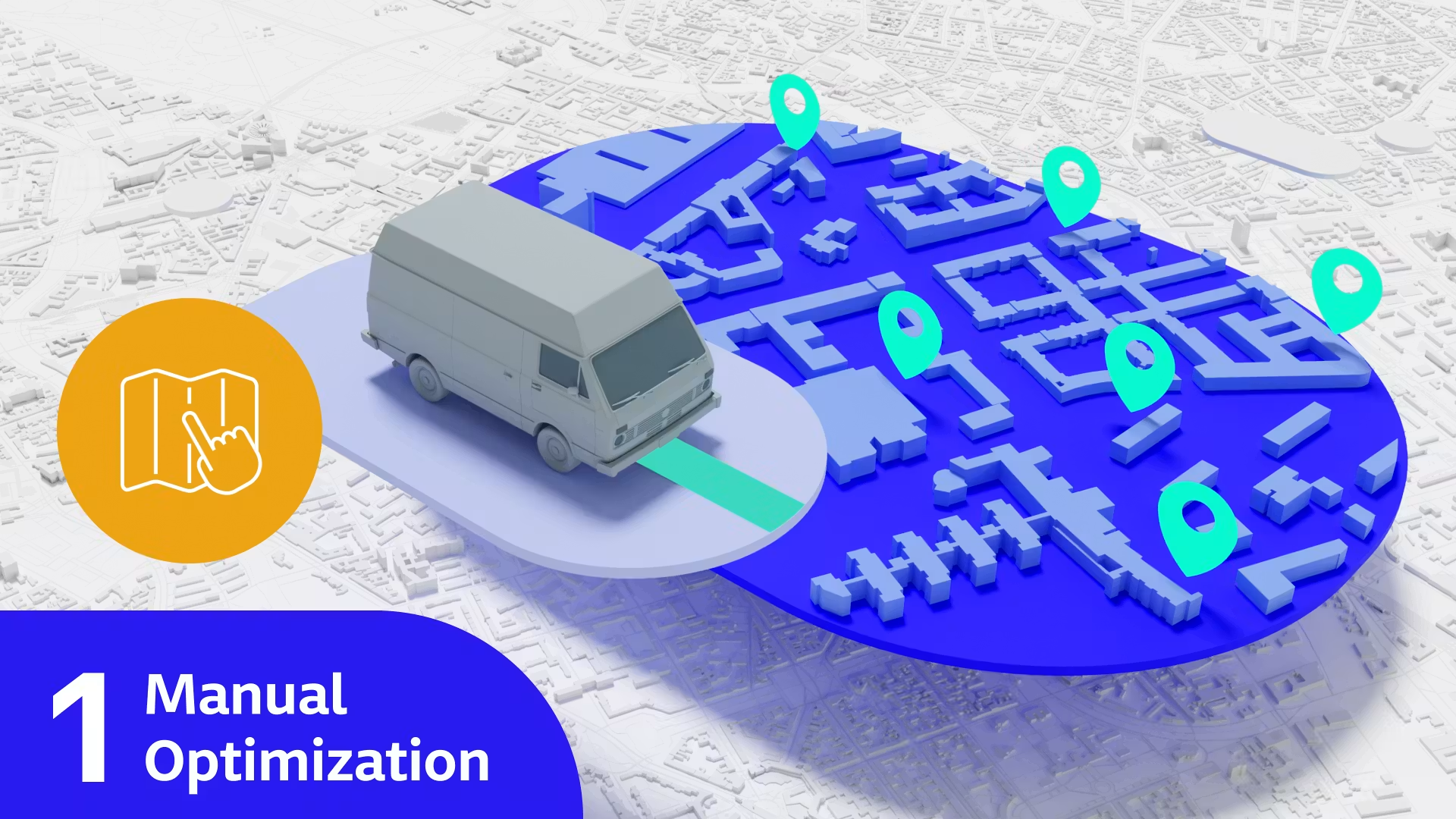
At the foundation of last mile delivery orchestration lies route optimization and determining the most efficient sequence of delivery stops, a process known as sequencing.
In this initial stage human insight and decision-making lead the way. Deliveries are planned manually, whether by the driver or the depot, establishing a sequence that allows for broad delivery time estimates—think "morning" or "afternoon" windows.
For recipients, this level provides minimal transparency regarding their shipment's journey, as updates and insights are limited. While digital tools might be in play, their application is elementary, lacking any advanced integration or automation. Here, manual control takes precedence.
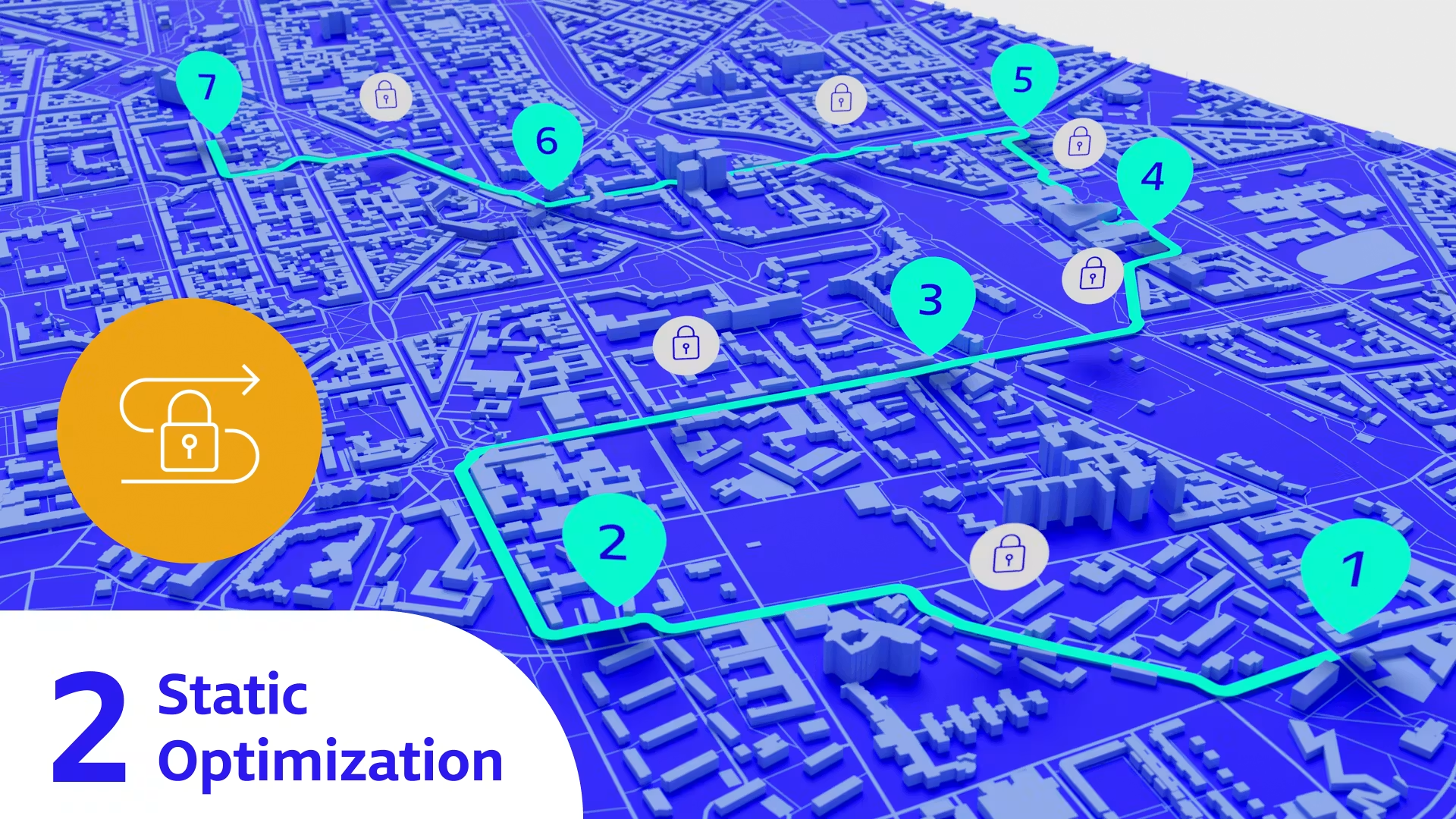
At Level 2, Static Optimization introduces digital enhancements to the delivery process. Here, technology calculates the most efficient sequence of delivery stops, and drivers use navigation software to follow their route and find delivery locations.
A geocoding solution indicates which building a delivery address belongs to, but does not provide precise information about the drop-off location. When this static route is carefully followed, customers receive more defined delivery windows, possibly as tight as one hour.
However, this system struggles to adjust to real-time delivery changes, offering little flexibility for the driver. In the event of delays, the customer's tracking may be temporarily suspended, leaving them uncertain about their shipment's arrival time. Yet, this stage marks a key advancement in digital integration, setting the stage for further automation.
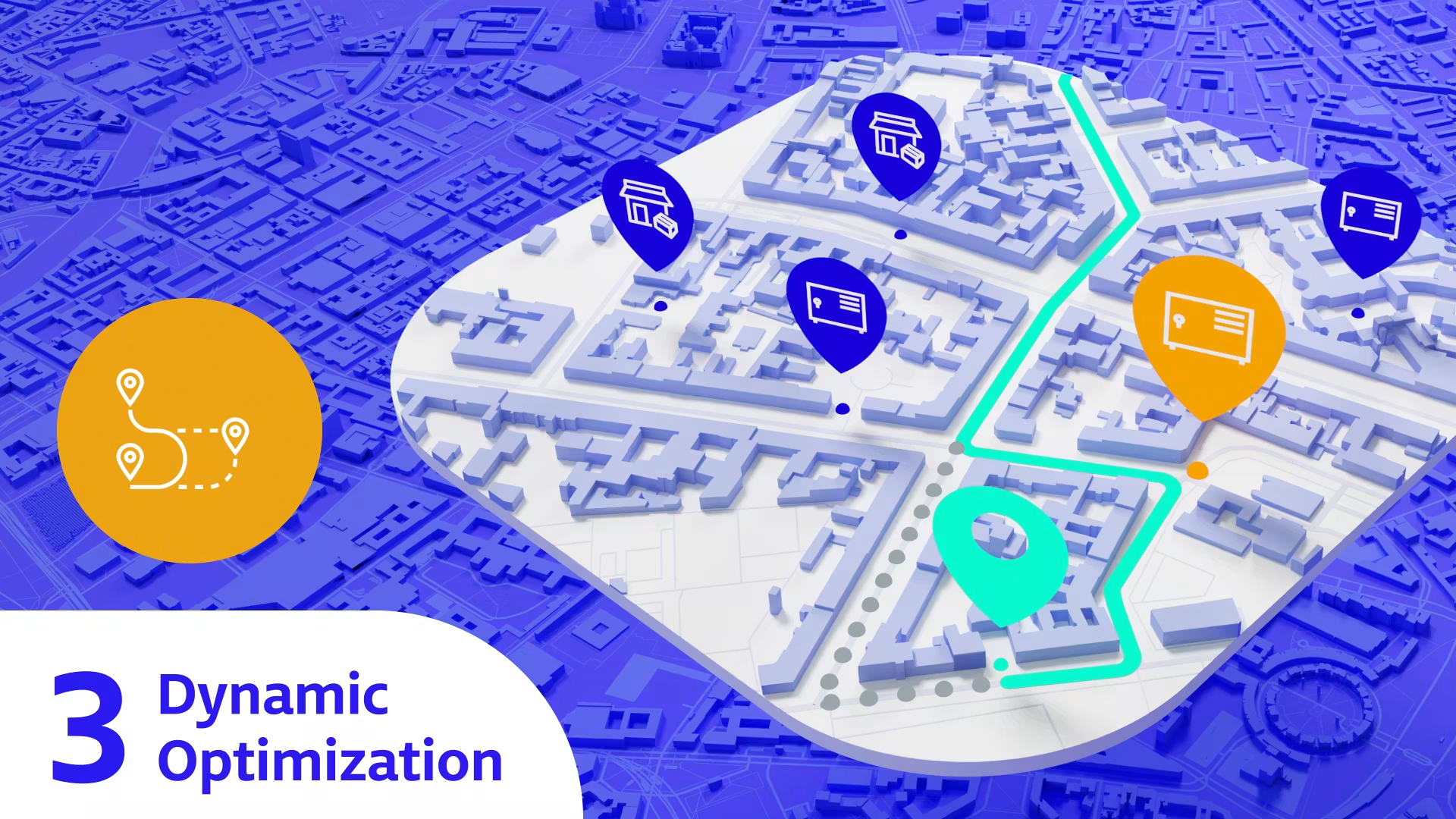
At Level 3, Dynamic Optimization brings flexibility and accuracy to the delivery process. Optimization algorithms now respond in real-time to any unexpected events along the delivery route, offering drivers detailed guidance with turn-by-turn navigation to exact curbside locations.
This innovation not only ensures drivers can adapt swiftly but also significantly enhances the delivery experience for recipients. They receive frequent updates, with delivery windows refined to just 15 minutes. In addition, this level introduces the ability for recipients to reroute their package up to the last moment, providing unparalleled flexibility.
While still under human supervision, the level of support at this stage is significantly enhanced and the optimization is highly sophisticated.
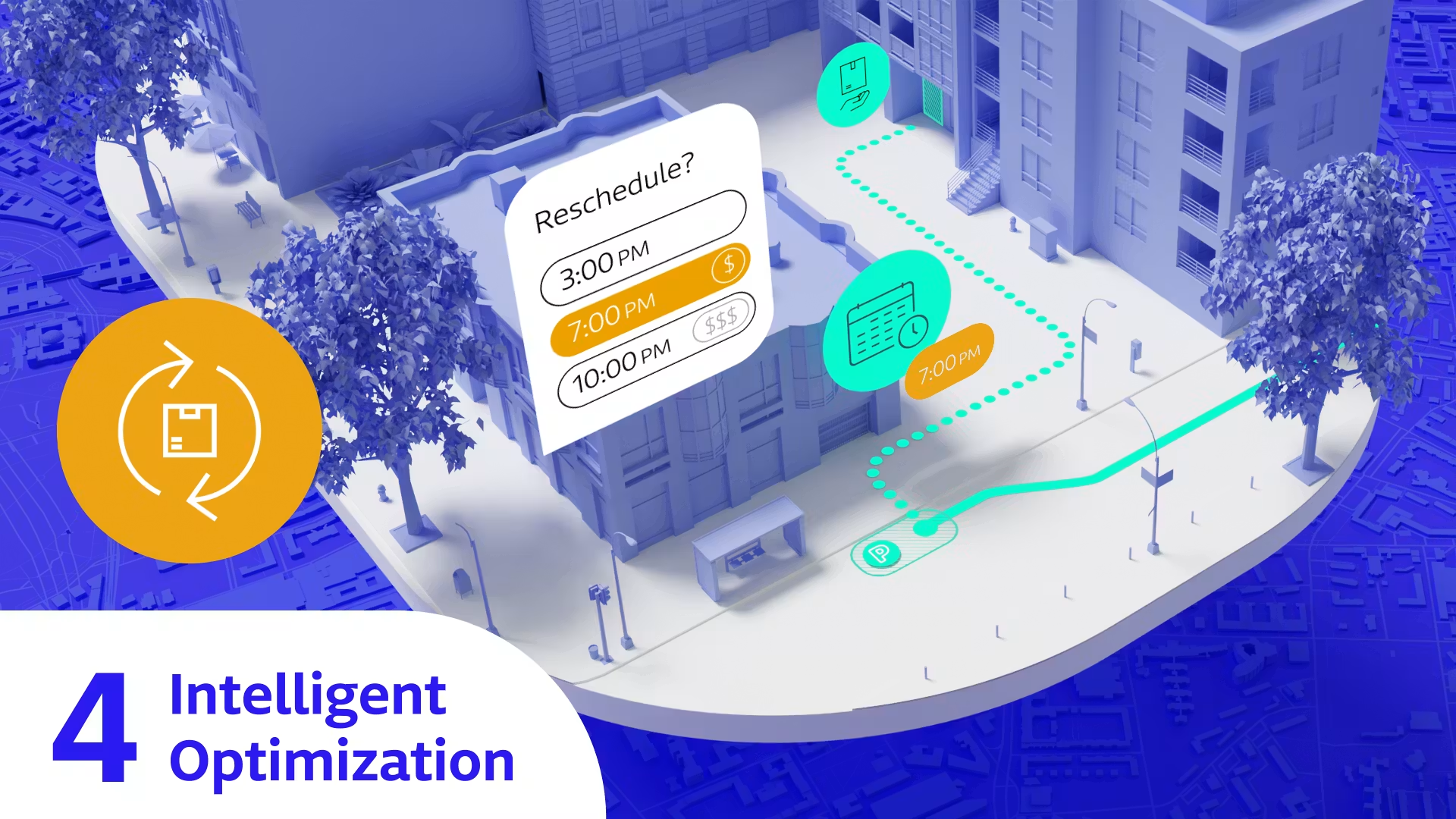
Level 4 marks the tipping point, where Intelligent Orchestration truly begins to shine, fully synchronizing every element of the delivery process—tools, workflows, and stakeholders. Efficiency leaps forward with detailed location insights, guiding drivers to exact drop-off points.
Last meter navigation is enriched with crucial delivery details, from parking to specific floors, and any special instructions critical for fast, accurate deliveries. This not only improves the delivery experience, but also keeps customers in the loop with precise 10-minute arrival windows and options for last-minute rerouting or premium service upgrades.
At this level automation leads the way, creating new monetization opportunities for couriers and improving both the speed and accuracy of deliveries.
A driver typically requires an average of 53 seconds more to reach the door than to return to the delivery vehicle, highlighting the potential for improvement. Precise location information and accurate ETA predictions can save time and create new growth opportunities.
Empower your drivers to rectify inaccurate locations through their delivery app, ensuring seamless navigation for their colleagues on future deliveries.

Enhance your delivery offerings by introducing premium services, taking advantage of recipients' ability to reroute shipments up to the last minute.
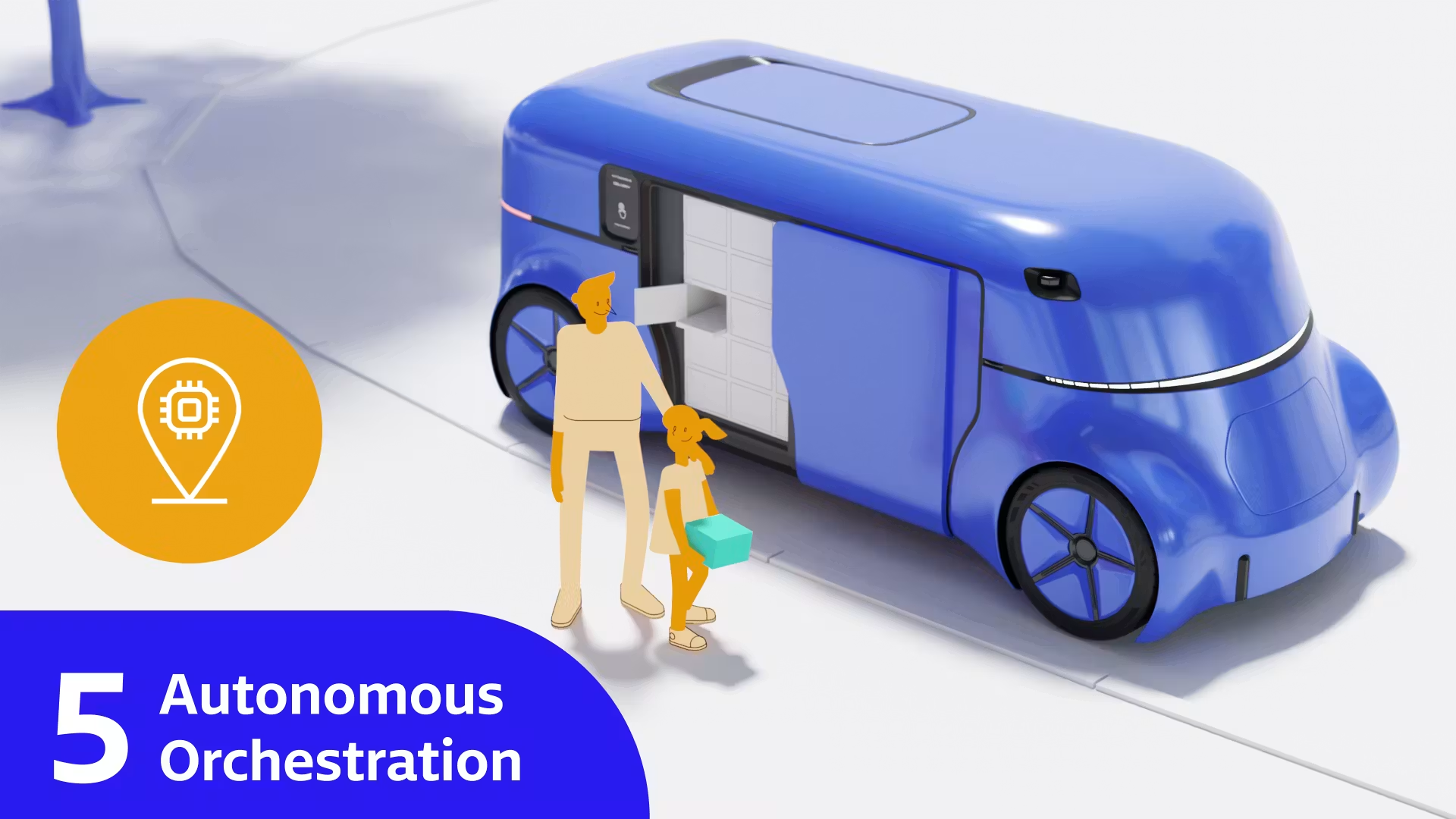
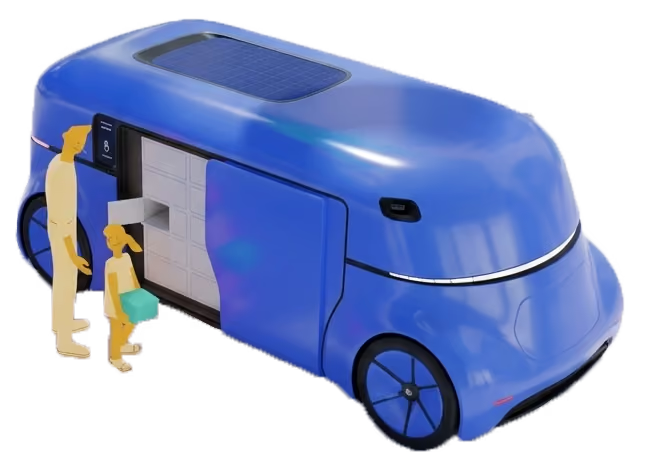
Finally, at level 5 Autonomous Orchestration represents the pinnacle of delivery evolution, where operations are seamlessly automated, synchronized and fully adaptive, paving the way for assisted or complete autonomous delivery. This level harnesses AI to continuously enhance delivery intelligence, incorporating last-meter and indoor navigation for precise, non-human deliveries. It grants unparalleled flexibility to recipients, allowing them to specify delivery locations at the last minute. With this advancement, delivery windows evolve into precise delivery times, redefining convenience and efficiency in the delivery ecosystem.
While Levels 1 and 2 have been the norm for some time, and the technology for Level 3 continues to evolve annually, the real transformation in last-mile delivery begins with the transition into orchestrated operations in Level 4 and 5. It's within this orchestrated space that the delivery process can truly advance, building a robust foundation for the future of parcel delivery: autonomous delivery.


The key is to recognize the need for change early and to adapt continuously, rather than waiting to be compelled by external forces. Being proactive keeps us ready for what’s next.